
New momentum for the Swiss Science Prize

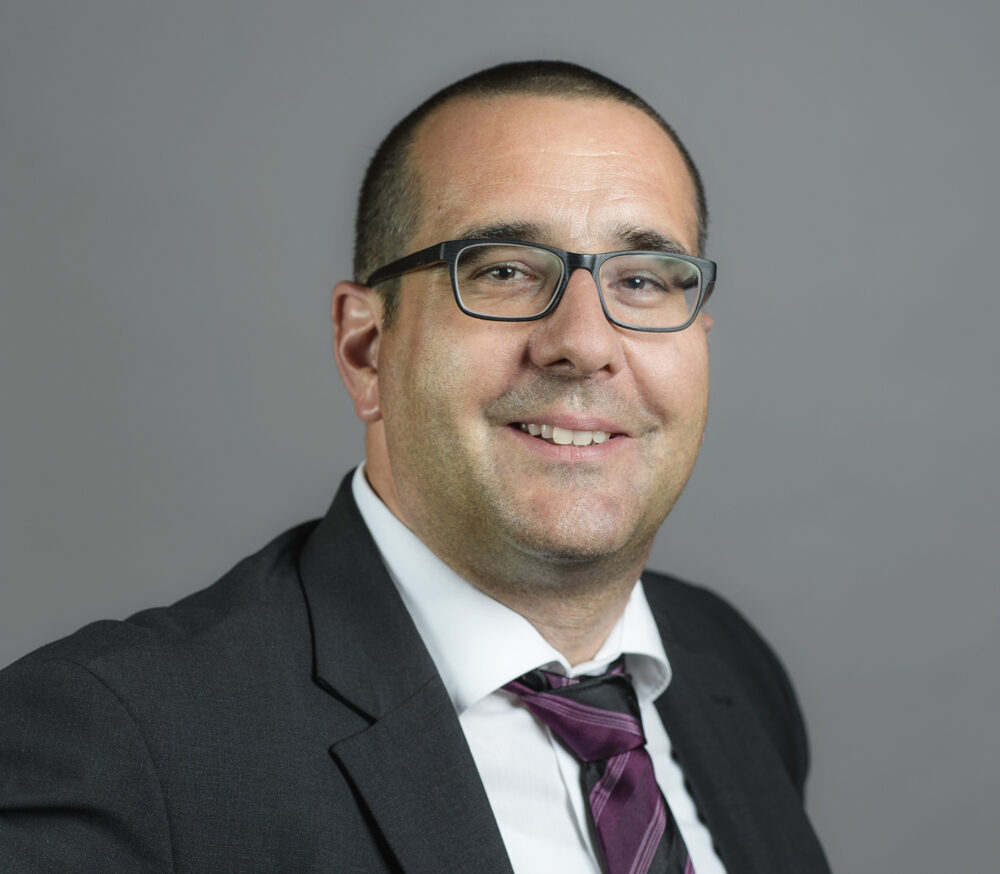
Every year, the prize is intended to reward the best research work for the benefit of human life. This is what the founder of the prize, Marcel Benoist, stipulated in his will at the beginning of the 20th century. With the prize, the Foundation wants to contribute to the promotion of top-level research in Switzerland and, above all, to its public perception.
Is top-level research limited to scientific disciplines?
No, the Swiss Science Prize Marcel Benoist is aimed at all disciplines. In the past, the prizewinners were mainly natural scientists. With the new orientation, the Foundation Board is introducing a rotation of disciplines. This is intended to ensure that the different scientific disciplines are better taken into account.
The Marcel Benoist Prize is also called the "Swiss Nobel Prize". Rightly so?
Of the almost one hundred Marcel Benoist Prize winners, ten later received the Nobel Prize. It is said that the Swiss Marcel Benoist Science Prize is the preliminary stage to the Nobel Prize. It honours researchers who have already made outstanding achievements and at the same time still have potential. The Nobel Prize often honours the life's work of a researcher.
Despite this tradition and significance, the Board of Trustees has decided to realign the Foundation and the Prize in 2015. Why?
The prize has been in existence for almost a hundred years. With this reorientation, the Board of Trustees, headed by Federal Councillor Johann N. Schneider-Amman, wants to make the Prize better known to the public. In addition, the assets of the foundation have shrunk in recent years. In 2015, the Board of Trustees has decided to put the prize on a sustainable basis and give it a new impetus.
Has the new orientation already changed the perception of the prize?
Previously, the Foundation presented the award at the prizewinner's home university. Since this year, the award ceremony has been held centrally in Bern. This gives the Foundation the opportunity to advertise the prize in a more targeted manner, also nationally. This year we held a media conference, optimised the website and shot a video with the prizewinner. The national media response was significantly greater than in previous years. The realignment is a process that takes time.
To increase the Foundation's assets, the Board of Trustees organised a fundraising campaign. Was it difficult to find donors?
The Foundation succeeded in raising just over 10 million Swiss francs from private sources by the end of October 2017. It is very gratifying that the idea of a Swiss science prize continues to meet with open doors and goodwill today. Then as now, it is recognized that education and research are essential prerequisites for work and prosperity in our country. Fundraising will continue in the coming months, so that sufficient funds will be available for the future.
What motivates the donors to get involved?
They are personalities who have an interest in Switzerland as a strong research location. They are convinced that education, research and innovation will advance a country like Switzerland that is poor in raw materials. We see this confirmed in our federal state for 150 years.
What will change for the prize winners?
On the one hand, the prize money has been increased from 50,000 to 250,000 Swiss francs. On the other hand, they will benefit - as will the research location Switzerland as a whole - from the work done to enhance the reputation of the prize. Finally, the nomination and election procedure will change. The Board of Trustees has entrusted the election of the prizewinner to the Swiss National Science Foundation. The National Science Foundation will ensure a broad-based selection based on criteria of excellence, take into account the various scientific disciplines on the basis of a rotation principle, and invite the Swiss Research Foundation to submit proposals by means of an open nomination procedure.
But the Federal Council will remain President of the Foundation Council?
According to the foundation charter, the member of the Federal Council responsible for research presides over the Marcel Benoist Foundation. Since 2013 this has been the head of the Federal Department of Economics, Education and Research, Federal Councillor Johann N. Schneider-Ammann. This underlines the interest of the public sector in this award.
By the centenary anniversary in 2020, the Foundation aims to implement the vision of a Swiss Science Day. Can you implement the idea?
With Swiss Science Day, the Foundation Board wants to make Swiss research known to the general public. The first part of the programme will give young researchers the opportunity to present their research. The second part of the day will then focus on the prizewinner, as a festive conclusion to Swiss Science Day.
Let's dare to take a look into the future. Which Swiss Science Prize winner will be honoured next with the Nobel Prize?
I would like to leave this answer to others. On the Marcel Benoist Foundation's website you will find all the prizewinners since 1920 - a who's who of top Swiss research. However, in our country we can consider ourselves in the fortunate position of having, in addition to the Benoist Prize winners, a wide variety of other researchers who conduct world-class research.
Communicators provided communication support for this year's Marcel Benoist Prize award ceremony. The interview with Dani Duttweiler was conducted by Judith Wenger.