
"We must show that prosperity and a wise locational policy go hand in hand"

City dwellers are worried about the housing shortage - in the countryside they fear population growth. These are the findings of the Zurich Politbarometer. The well-known political geographer Michael Hermann conducted the study in collaboration with the Forum Zurich. Christine Moser, Consultant Communicators, spoke with Mario Senn, Head of Politics and Projects at the Zurich Chamber of Commerce and Secretary of the Forum Zurich, and asked him how he assesses the results of the Politbarometer - as a representative of the economy and as a member of the Adliswil municipal council.
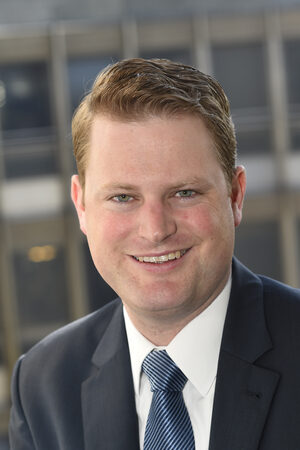
Mario Senn, Head of Policy and Projects at the Zurich Chamber of Commerce and Secretary of the Zurich Forum
Communicators: The Zurich Politbarometer shows which topics are of concern to the people of Zurich. What worries you most personally?
Mario Senn: I am a pretty optimistic person per se. What worries me - in the broadest sense - is how we can secure our prosperity for the future, i.e. economic development in the longer term. On the one hand, I ask myself how Switzerland and Zurich can continue to compete successfully in the international arena. On the other hand, as a citizen and as a local politician, I am concerned with the question of how long we can continue to finance our state budgets. We have "recharged" ourselves a great deal, not very sustainably. This can be seen, for example, in our carefree approach to old-age provision: demographic changes (keyword: higher life expectancy) are hardly taken into account and in some cases are even completely ignored.
The differences in the various regions are interesting. The housing shortage is a problem for city dwellers, while immigration is a problem for people living in rural areas and conurbations. These are basically the same problems?
Only to a limited extent. In the city, people are worried about finding a flat. What's interesting is that, according to the political barometer, this issue is of much greater concern to younger people than to older people. They have less access to the housing market, probably also because they earn even less or because many more young people than before prefer to work part-time. The situation is different outside the city, where vacancy rates have also been higher for some time and housing prices are tending to fall. In the countryside, it is more the population growth and the associated need for additional infrastructure that is causing concern. Although there is also a need for infrastructure in the cities, the population is less aware of it because of the already high density.
Left-wing and green politicians are happy to address the issue of housing shortages by demanding more non-profit housing. What do you think of this approach?
Ultimately, housing shortage means that demand is greater than supply. Many people would like to live in the city. The only way to redress this imbalance is either to let prices rise, which nobody wants, or to expand the supply. Non-profit housing developers have their role to play. But they are never able to build enough apartments, which is why other investors are needed. I think it's a very bad idea to subsidize individual housing projects through direct payments or cheap land levies. This benefits only a few at the expense of all, without eliminating the housing shortage.
The economic development is not causing the population in all parts of the canton much trouble. Shouldn't the alarm bells be ringing in the economy?
Yes and no. The fact that many people are not worried about economic development is a good sign. It shows that our economy is doing pretty well and that we can benefit from great prosperity. On the other hand, I also notice that many people take our prosperity for granted. Perhaps also because more and more people are employed in the public sector and are therefore less exposed to competition. In this sense, I also see this assessment as a mandate to show the population that prosperity and a wise location policy are linked.
The tax burden is also seen as not very disturbing. How do you assess this result?
The canton of Zurich is very attractive for middle-income earners from a tax perspective. This result is therefore not surprising. However, you have to be aware that the largest share of tax revenue comes from wealthier people, and the Canton of Zurich is in a rather unfavorable position compared to the rest of Switzerland. It would therefore be particularly interesting to know how satisfied the "multitude" are with the tax burden. Overall, I find that citizens tend to underestimate the tax burden, mainly because of indirect taxes. But also the value-added tax or corporate taxes are always borne by people in the end, you just don't feel it directly. The result therefore does not invite us to worsen our position in tax competition.
Published on 17. March 2017 by Martin Arnold
Back